Bard Slays Smaug
Bard the Bowman, a grim-voiced and grim-faced descendant of Girion, Lord of Dale, slays the dragon Smaug in a single, decisive shot, an act that ends the dragon's long tyranny and reshapes the political landscape of the North. The event is a masterful convergence of courage, inherited skill, and timely intelligence, transforming Bard from a mere captain of archers into the legendary Dragon-shooter and the rightful heir to Dale's throne. It is the climax of the dragon's assault on Lake-town and the turning point of the entire quest, proving that even the most formidable evil can be undone by a single, well-aimed stroke.
Background and the Dragon's Assault
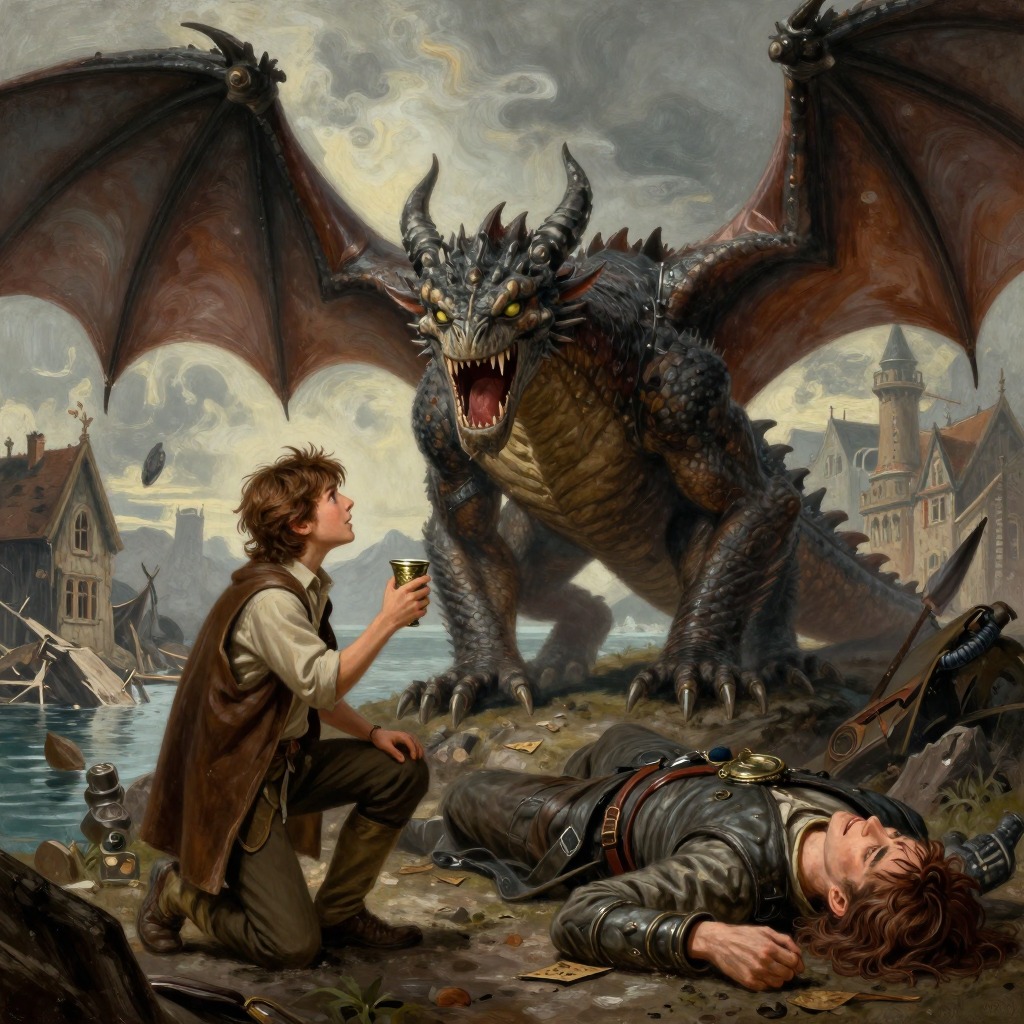
Smaug, enraged by the theft of a golden cup from his hoard and by the riddling conversation with Bilbo Baggins, deduces that the Lake-men of Esgaroth have aided the dwarves. He flies south to exact vengeance, his approach heralded by a great light that first appears in the low hills, turning the northern end of the Long Lake golden. The townspeople initially mistake the glow for the return of the King under the Mountain, shouting that the river is running gold, but a grim-voiced man, Bard, runs hotfoot to the Master, crying that the dragon is coming and ordering the bridges to be cut and the town to arm. The warning trumpets sound, and the joy of the people turns to dread. Smaug arrives with terrible speed, a spark of fire that grows ever huger and brighter, and the lake ripples red beneath the awful beating of his wings. The bridge to the land is destroyed, and the dragon finds his enemies on an island in deep water, too deep and cool for his liking. Roaring, he sweeps back over the town, and a hail of dark arrows leaps up, snapping and rattling on his scales and jewels, their shafts burning and hissing into the lake. No one has dared to give battle to him for many an age, but Bard runs to and fro, cheering on the archers and urging the Master to order them to fight to the last arrow.
The Slaying of Smaug
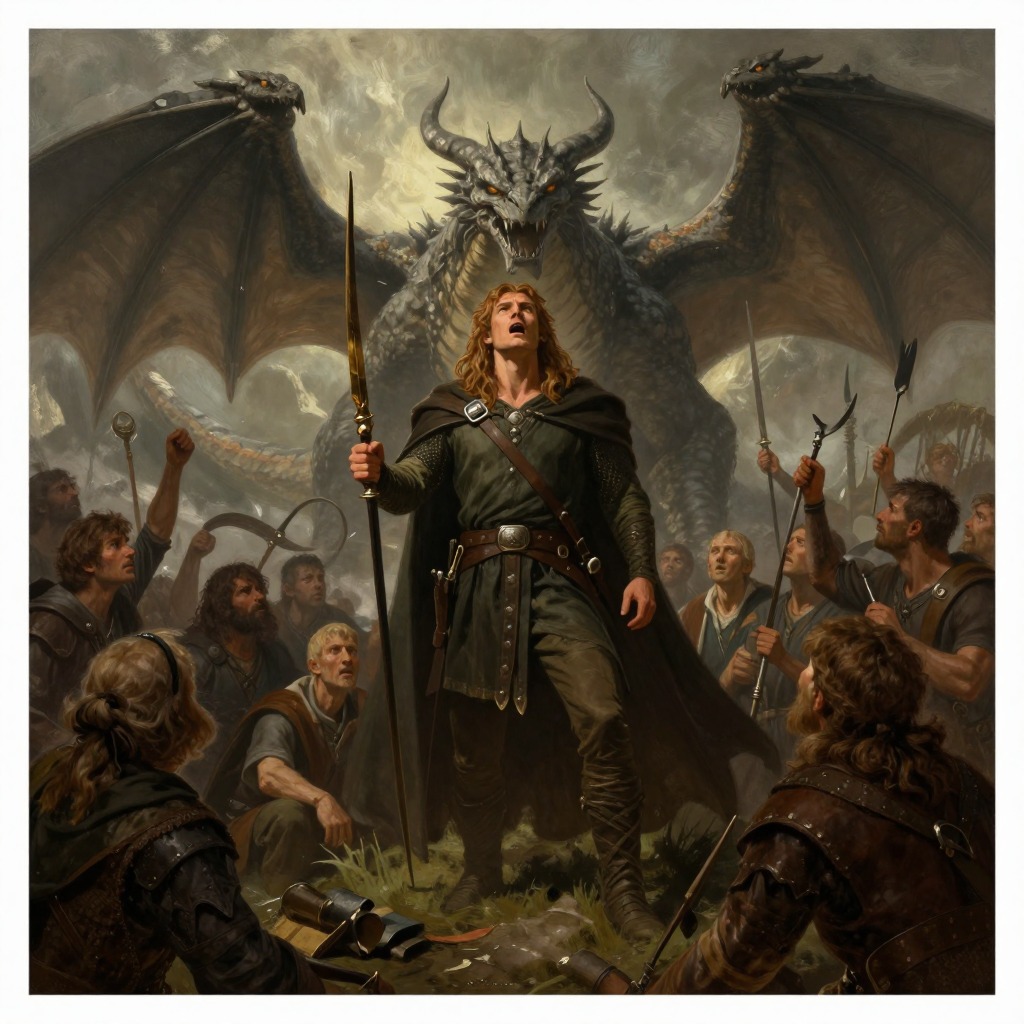
Fire leaps from the dragon's jaws as he circles high in the air, lighting all the lake, then swoops down through the arrow-storm, reckless in his rage, seeking only to set the town ablaze. He destroys house after house, and the people begin to flee into boats, the Master himself turning to his great gilded boat to save himself. But a company of archers, led by Bard, holds their ground among the burning houses. Bard, a descendant of Girion, whose wife and child escaped down the Running River from the ruin long ago, shoots with a great yew bow until all his arrows but one are spent. As the flames near him and his companions leave him, an old thrush, unafraid, perches on his shoulder and brings him news. Marvelling, Bard finds he can understand its tongue, for he is of the race of Dale. The thrush tells him to wait for the rising moon and to look for the hollow of the left breast as the dragon flies and turns above him. Bard draws his bow-string to his ear. The dragon circles back, flying low, and as he comes, the moon rises above the eastern shore and silveres his great wings. Bard speaks to his last arrow, a black arrow he has saved from his father and from of old, asking that if it ever came from the forges of the true king under the Mountain, it should go now and speed well. The dragon swoops once more, lower than ever, and as he turns and dives down, his belly glitters white with sparkling fires of gems in the moon—but not in one place. The great bow twangs. The black arrow speeds straight from the string, straight for the hollow by the left breast where the foreleg is flung wide. It smites and vanishes, barb, shaft and feather, so fierce is its flight. With a shriek that deafens men, fells trees and splits stone, Smaug shoots spouting into the air, turns over, and crashes down from on high in ruin, full on the town. His last throes splinter it to sparks and gledes. The lake roars in, a vast steam leaps up, white in the sudden dark under the moon, and then there is silence. That is the end of Smaug and Esgaroth, but not of Bard.
Consequences and Aftermath
Bard emerges from the shadows, drenched with water, his black hair wet over his face and shoulders, and a fierce light in his eyes. He declares himself the slayer of the dragon, and the people shout "King Bard! King Bard!" The Master of Lake-town, who had tried to flee, grinds his chattering teeth and argues that Girion was lord of Dale, not king of Esgaroth, and that the town has always elected masters from among the old and wise. But the people, having had enough of the old men and the money-counters, cry for the Bowman. Bard, however, sets aside the immediate quarrel, stating that this is no time for angry words, and turns to help in ordering the camps and caring for the sick and wounded. The death of Smaug leaves the vast treasure of the Mountain unguarded, and news of it spreads like fire. The Elvenking, who had already been marching with his host, hears the tidings and turns aside to aid the Lake-men, while the birds of the air carry the news far and wide, even to Beorn in his wooden house and to the goblins in their caves. The event sets the stage for the siege of the Mountain and the Battle of Five Armies, as many now seek a share of the dragon's hoard.